Insights
When Medical Expertise Gets Cheap, Who Pays for Care?
AI is changing what is scarce in healthcare. Payment has always followed scarcity, and it is about to move.
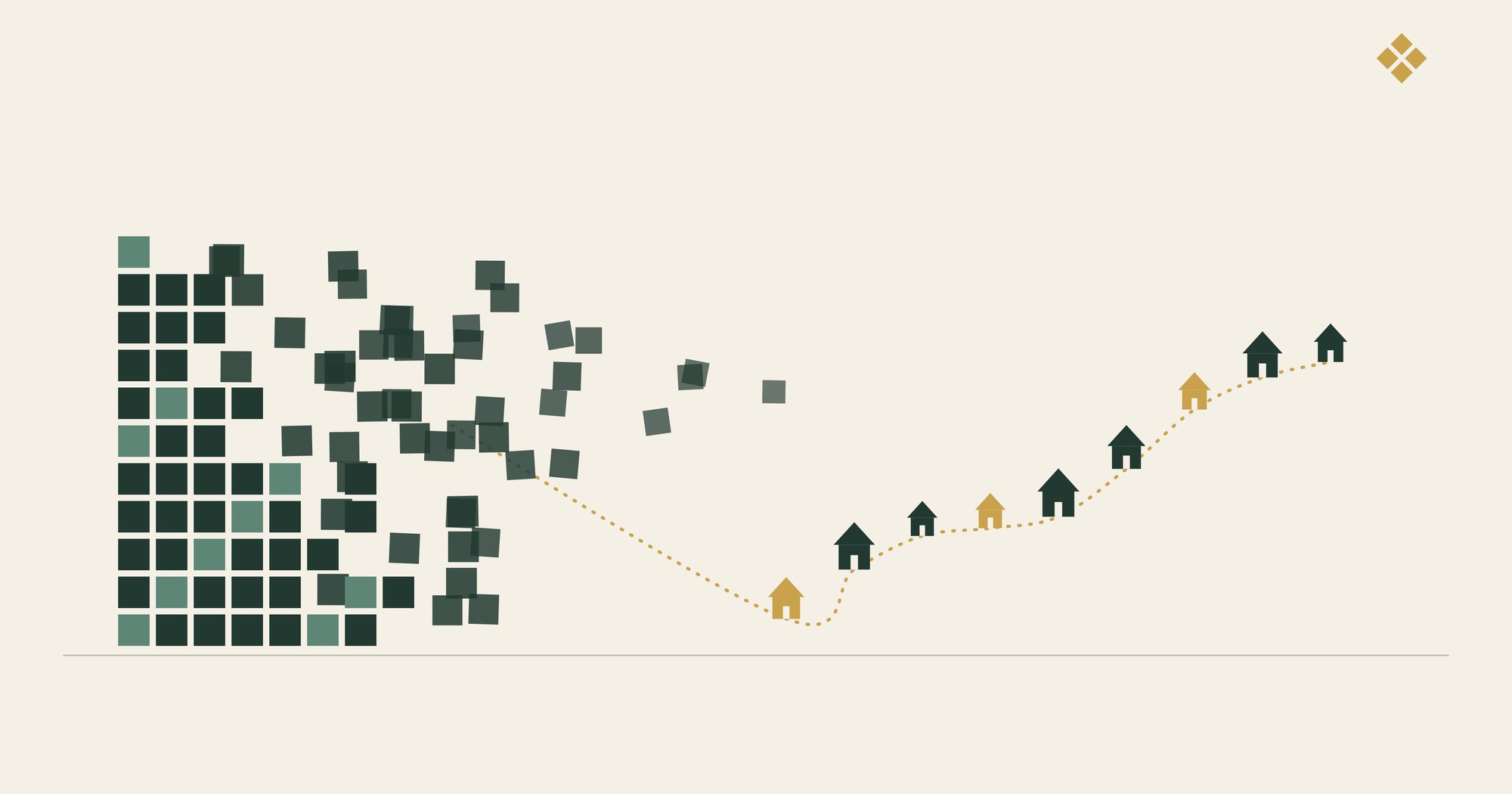
The United States spent nearly $5.3 trillion on health care in 2024, about 18% of GDP. Public programs paid for 43% of it and private insurance for 34%, most of that through employers. Employers are paying the bill under growing strain. KFF puts the average family premium at almost $27,000 a year. Mercer projects that employers' health benefit costs will rise about 6.5% in 2026, the largest increase since 2010.
At the same time, something has changed on the patient's side of the table. When OpenAI launched ChatGPT Health in January, it said more than 230 million people were asking ChatGPT health questions every week. By July, the number was over 300 million. Those users can now connect their medical records and Apple Health data. Millions of patients get a first opinion before they ever see a clinician, and it costs them nothing.
Bill Gates has said that within a decade, great medical advice will become "free, commonplace." Vinod Khosla has made similar predictions for years. You don't have to agree with their timelines to see the direction. Medical knowledge is becoming abundant.
That matters for payment, because healthcare has always paid for whatever was scarce: the physician's time, the specialist's judgment, the hospital bed. When the scarce thing changes, the money moves.
What becomes scarce
If advice and diagnosis get cheap, three things stay expensive.
The first is hands-on care: the procedure, the exam, the nurse at the bedside. The second is execution, actually getting a patient from a recommendation to a result, across every handoff in between. The third is accountability: someone who owns the outcome when the plan doesn't work.
Value-based care has always paid for the second and third. That is why I think AI will push more of healthcare toward risk-based payment, not less.
The government is already testing both sides
Two Medicare programs launched this year show where public payment is heading.
The first is ACCESS, a 10-year CMS Innovation Center model that started in July. It pays technology-enabled care organizations to manage chronic conditions like cardio-kidney-metabolic disease, musculoskeletal pain and behavioral health. The payments are recurring, and CMS holds back half until patients show measurable clinical improvement. That is the government saying it will pay for technology-driven care, as long as the outcome shows up.
The second is WISeR, a six-year model that began in January and uses AI-assisted prior authorization for selected services in traditional Medicare. That is the government using AI to decide what it will pay for.
Put those together and you can see the outline of the next decade. Payers will use AI to scrutinize spending, and they will pay more readily for care that proves results.
The algorithm-versus-algorithm problem
There's a less comfortable side to this. Health plans are using AI to review claims and authorizations. Providers are buying AI to write appeals and documentation. Each side's software is learning to beat the other's.
None of that spending makes anyone healthier. It is administrative cost growing at machine speed.
The way out is the one value-based care already offers. When a payer and a provider share responsibility for total cost and outcomes, there is far less reason to fight over each claim. I expect the cost of this AI arms race to become one of the strongest arguments for moving to risk-based contracts.
Employers are quietly changing their role
Employers have been the backbone of American health coverage for 80 years, and their role is starting to shift. Enrollment in individual coverage HRAs, which let employers give workers a fixed amount to buy their own plan, doubled to more than 500,000 people at the start of 2026. Among employers with 1,000 or more workers, adoption grew 178% in a year.
My view: when an employer gives a worker a budget instead of a plan, the worker becomes the buyer. When that worker shops with an AI assistant that can read their records, compare networks and explain tradeoffs, the assistant starts doing the job benefits consultants and brokers do today. Over time, employers may act less like plan sponsors and more like funders. The decisions will sit with individuals and the tools they use.
Routine care may move off insurance
Utah this year became the first state to let an AI system renew routine prescriptions for chronic conditions, under a state regulatory sandbox with clinical oversight. It is a small pilot, but it points to something bigger.
If refills, minor questions and routine follow-ups can be handled cheaply and safely by AI, more of that care will likely be paid directly, by subscription or cash. Insurance would increasingly cover the expensive, unpredictable events, and organizations that manage the full cost of a population. For risk-bearing groups, that is good news. The care left inside the insurance system will be the care where coordination and judgment matter most, which is exactly where they add value.
Who pays for the AI itself?
This question gets less attention than it should. Under fee-for-service, when AI does work a clinician used to bill for, there is often no way to pay for it unless someone creates a new billing code. Under capitation or shared savings, the savings fund the technology. The organization that avoids a readmission keeps part of what it saved.
That gives risk-bearing organizations a structural advantage in adopting AI. They are the ones who get paid when it works.
The future role of doctors
Physicians have already adopted AI faster than almost anyone expected. The AMA's 2026 survey found that 81% use AI professionally, more than double the rate in 2023. Most of that use is summarizing research, drafting notes and writing patient messages. The same survey found that 88% worry about losing clinical skills to AI.
The diagnostic capability is advancing quickly too. In a research study last year, Microsoft's diagnostic system correctly solved about 85% of 304 complex case records from the New England Journal of Medicine. The physicians in the study averaged 20%. Microsoft is careful to say the physicians had no colleagues or reference tools, the work hasn't been peer reviewed, and the system isn't approved for clinical use. Still, the direction is clear.
I don't believe physicians become less important. I believe their job changes. The physician of the next decade will be less the source of answers and more the person accountable for decisions. That means judging when the model is wrong, performing the exam and the procedure, having the hard conversation, and leading a care team that will include AI agents. One company already prices its voice-based AI nursing agents at $9 an hour. Primary care physicians may manage much larger panels, with AI handling the routine contact and physicians handling the complexity.
The biggest risk is training. If AI does the early-career work that builds clinical judgment, we have to find another way to build it.
The future role of hospitals
Care is already leaving the building. Vizient's 2026 forecast projects outpatient volume growing 20% over the next ten years, while inpatient discharges grow only 7%. Population growth alone would have added about 14%, and Vizient credits technology, including GLP-1 drugs, with pulling inpatient growth down. Congress has extended Medicare's hospital-at-home waiver through 2030, and more than 360 programs across 139 health systems are approved.
The hospital of the future looks more like two things. One is a place for the sickest patients and the most complex procedures. The other is a command center that coordinates care happening in homes, clinics and virtual settings.
How hospitals are paid will decide how they feel about all of this. A hospital paid per admission sees an avoided admission as lost revenue. A hospital that carries risk sees it as margin. AI will make avoidable admissions easier to prevent, and that will widen the gap between those two business models.
Payment follows accountability
Every major shift in how American healthcare is paid has followed a change in what was scarce and who was willing to be accountable for it. AI is making expertise abundant. What remains scarce is the ability to turn that expertise into results for real patients, at scale, and to stand behind the outcome.
The organizations that take on that accountability, whether health systems, medical groups, care companies or employers, will be the ones healthcare pays for in the next decade.
Jennifer Dunphy, DrPH, MBA, MPH, is Founder and Managing Principal at The Value Care Group, advising risk-bearing healthcare organizations and their partners on medical cost performance, population health, care delivery, and operational strategy.